How Small FMCG Brands in Indonesia Can Build Real Traction Without Burning Money They Do Not Have
A practical, story-driven guide for Indonesian UMKM and SME-sized FMCG brands on how to build traction online and offline, stretch small budgets, create repeat purchase and grow without destroying margins.
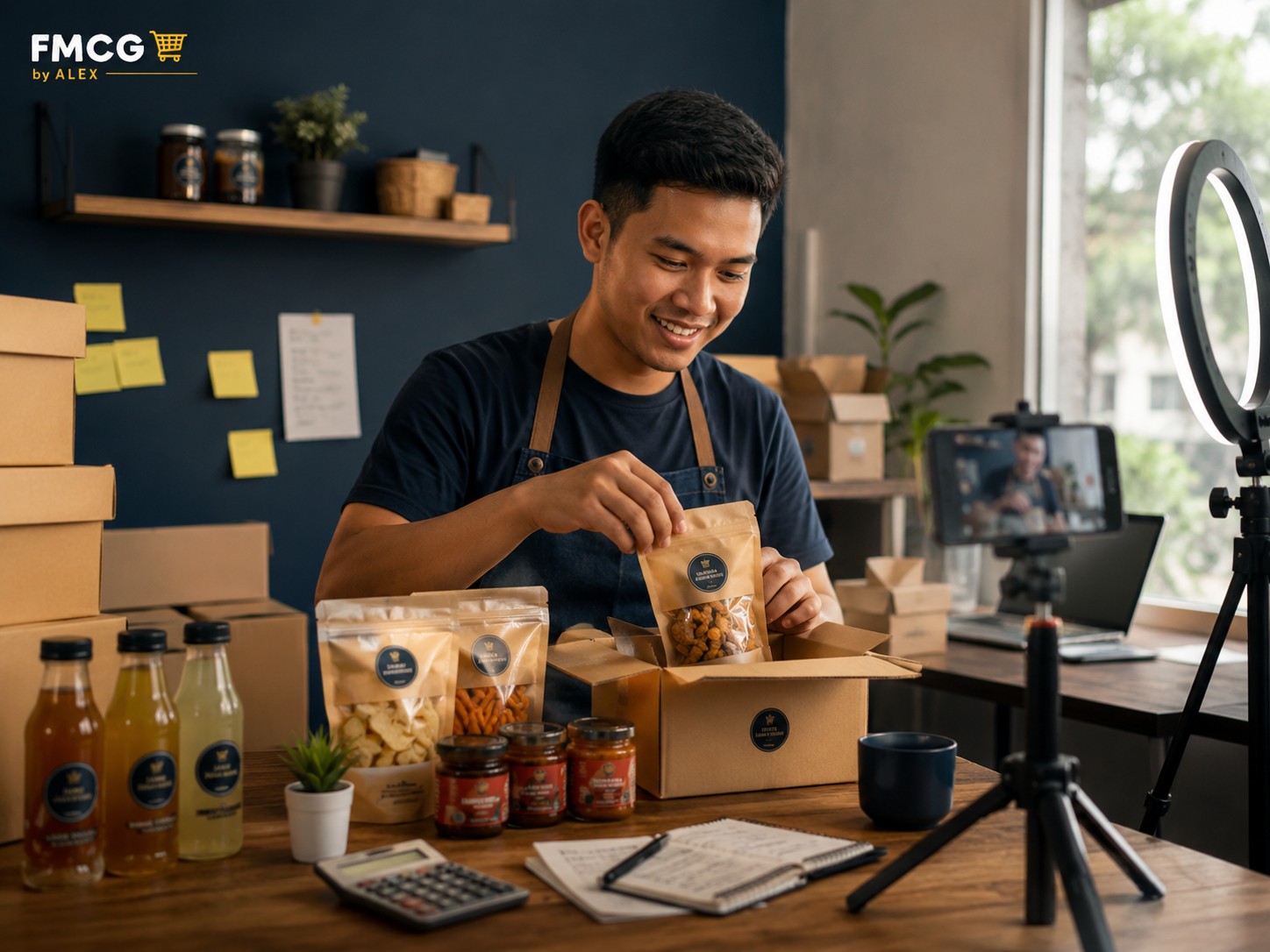
Every small FMCG founder in Indonesia begins with a dream that is both beautiful and slightly dangerous.
The dream usually starts with a product on the kitchen table, a few friends saying, “Wah, ini enak banget,” and suddenly the founder imagines the brand sitting proudly in Indomaret, Alfamart, Super Indo, Hypermart, Ranch Market, Tokopedia, Shopee, TikTok Shop, Grab, GoFood, local warung, cafés, offices, hotels, airports and perhaps even a small export shipment to Singapore because, well, why not aim high?
This is the magic phase. Everything still feels possible. The packaging looks nice. The product tastes good. The logo is finished. The founder has an Instagram page, maybe even a marketplace store. There is energy, hope and usually a WhatsApp group full of relatives giving advice nobody asked for.
Then the market arrives.
Retailers ask for margin. Distributors ask for margin. Resellers ask for margin. Marketplaces take fees. Ads cost money. Sampling costs money. Packaging suppliers want minimum order quantities. Delivery costs keep appearing like mosquitoes after rain. Influencers want payment. Booths at bazaars are not free. Even printing a small banner somehow costs more than expected.
And then the founder discovers the first hard truth of FMCG:
A good product is not enough.
It is painful, but it is true. A good product gives you the right to start. It does not guarantee traction. Traction requires repeat purchase, availability, trust, channel economics, storytelling, distribution discipline and enough margin left over to survive the next production cycle.
This is especially true in Indonesia, where the opportunity is huge, but the market is fragmented, competitive and operationally messy. Indonesia has millions of UMKM, fast-growing digital adoption, strong marketplace behaviour, QRIS penetration, social commerce, traditional trade, modern trade, minimarkets, warung, local distributors, reseller networks and a consumer base that can be incredibly open to new products — but only if the product makes sense, is available, and does not create too much risk.
For large FMCG companies, complexity is part of the machine. They have trade budgets, key account managers, merchandisers, agencies, promoters, warehouses, sales supervisors and people whose full-time job is to argue with Excel. Small brands do not have that luxury.
A small brand cannot behave like a miniature version of a multinational. It does not have the money, the team, the leverage or the time. If a small Indonesian FMCG brand copies the big-company playbook too early, it will usually run out of cash before the market has even had enough time to decide whether it likes the product.
The trick is not to act big.
The trick is to act focused.
The First Mistake: Trying to Launch Everywhere
Indonesia is tempting because it is so large. A founder looks at Jakarta, Bandung, Surabaya, Medan, Bali, Semarang, Makassar, Yogyakarta and all the cities in between and thinks, “If we can just get a little bit of each market, we will be fine.”
That sounds logical until you remember that “a little bit of each market” often means being invisible everywhere.
A small budget spread across Indonesia disappears. It becomes a few online ads that do not repeat often enough, a few outlet visits that nobody follows up on, a few samples handed out to people who smile politely and never buy, and a few reseller chats that start with enthusiasm and end with silence.
Indonesia rewards density.
It is better to be noticed by the right 500 people in one area than ignored by 50,000 people across the country. A small brand does not need national distribution at the beginning. It needs a beachhead.
That beachhead can be a neighbourhood, a community, a city cluster, a channel or a very specific consumer use case. A healthy snack brand might start with gyms, offices, cafés and young professionals in South Jakarta. A sambal brand might start with local food stalls, WhatsApp communities, small resellers and TikTok videos showing real meals. A kids’ snack brand might start with mothers’ communities, lunchbox content, daycare networks and small stores near schools. A beverage brand might start with offices, sports communities, events and independent minimarkets.
This is not thinking small. It is thinking realistically.
If the brand cannot win a small area, it probably cannot win a large one. If it cannot create repeat purchase in one cluster, adding more cities will only create more confusion. Distribution without repeat purchase is not traction. It is decoration.
There are many brands sitting on shelves that are technically “available” but not actually moving. That is not distribution. That is inventory taking a holiday.
The Founder’s First Real Job Is Not Marketing. It Is Learning.
Many founders think their first job is to sell as much as possible. That is understandable. Sales keep the lights on. Sales make everyone feel good. Sales make the WhatsApp family group proud.
But in the early stage, the founder’s real job is to learn as fast as possible.
Who is buying? Why are they buying? When are they using the product? What do they compare it with? What do they say after trying it? Do they reorder? Do they recommend it? Which pack size works? Which price feels acceptable? Which channel creates repeat purchase? Which message makes people stop scrolling? Which outlet can actually sell it? Which reseller is serious and which reseller only wanted the starter discount?
This is why online channels are so valuable for small Indonesian brands. Shopee, Tokopedia, TikTok, Instagram, WhatsApp and even simple Google Forms can become learning tools. The first goal is not to build a national e-commerce empire. The first goal is to understand what the market responds to.
Maybe the founder thinks the product sells because it is healthy, but consumers buy because it tastes indulgent. Maybe the founder thinks the product is for young women, but the repeat buyers are mothers buying for children. Maybe the founder believes the single pack is the hero, but online buyers prefer bundles because shipping makes more sense. Maybe the founder thinks the premium packaging is the attraction, but consumers keep mentioning the practical resealable pouch.
The market will tell you the truth, but only if you listen.
Unfortunately, many founders do not listen. They keep pushing the story they want to tell instead of noticing the story customers are already telling back to them.
That is expensive.
When money is limited, the cheapest marketing research is still conversation. Read your reviews. Reply to chats. Ask people why they bought. Ask why they did not reorder. Talk to shop owners. Talk to resellers. Watch which content creates questions. Watch which questions repeat. If ten people ask the same thing, that is not an annoyance. That is your market giving you a free strategy session.
The Budget Problem Is Real, But It Is Not Always the First Problem
Of course, small brands need money. Anyone who says you can build an FMCG brand without money has probably never paid for packaging, delivery, damaged goods, listing requirements or production mistakes.
But many small brands blame budget too early.
They say, “If only we had more marketing money, we could grow.”
Maybe. But sometimes more money only helps you make the same mistakes louder.
If your pricing is wrong, more ads will not save you. If your product does not create repeat purchase, more sampling will not fix the business. If your packaging does not build trust, more traffic will expose the weakness faster. If your resellers are untrained, more resellers will create more chaos. If your margins cannot support the channel, more volume will only accelerate the pain.
This is the uncomfortable part of FMCG. Before stretching the budget, you need to know whether the business can survive growth.
That means understanding the real economics of the product. Not just ingredient cost. Not just packaging cost. The full cost.
Production, packaging, delivery, marketplace fees, payment fees, reseller margin, distributor margin, retailer margin, damage, expiry risk, promotions, samples, returns and the little costs that appear at the end of the month like uninvited guests.
Many small brands price their products emotionally. They look at competitors, add a small margin and hope it works. But hope is not a pricing strategy. Hope is what you use when your delivery driver says, “Sebentar lagi sampai,” and the map shows he is still in another district.
If the consumer price cannot support online sales, reseller margins, offline outlet margins and future promotions, the brand is building on sand.
This does not mean every small brand should price high. It means the price must have a future. A brand that starts too cheap may create trial, but later it cannot afford distribution. It cannot afford retail margin. It cannot afford promotion. It cannot afford a price increase without upsetting early customers.
Cheap can create movement, but it can also trap you.
One Product Must Become the Doorway Into the Brand
Small founders love creating variants.
This is natural. When you are close to the product, every idea feels exciting. Original flavour, spicy flavour, extra spicy flavour, cheese flavour, chocolate flavour, matcha flavour, low-sugar version, premium version, family pack, mini pack, gift pack and one limited edition inspired by your cousin’s trip to Bali.
Variety feels like growth.
In the beginning, it often creates confusion.
Every SKU needs packaging, inventory, production planning, content, explanation, pricing and working capital. Too many SKUs make it harder to know what is actually working. Worse, they split the already small budget and attention across too many products.
A young brand needs one product that acts as the doorway.
The product people remember. The product resellers can explain. The product you can sample easily. The product that gets the best reorder. The product that makes someone say, “You have to try this one.”
That is your hero SKU.
It may not always be the founder’s favourite. Founders are emotionally suspicious people when it comes to their own products. Sometimes the market chooses a hero the founder did not expect. Accept it. The market is rude but useful.
Once the hero SKU starts moving, other variants can support it. But at the beginning, the brand needs focus. A small brand with one strong hero is usually healthier than a small brand with twelve weak products and a storage room full of regret.
Trust Is the Real Currency
In Indonesia, trust matters deeply.
This is especially true in food, beverages, supplements, baby products, cosmetics, personal care, pet care and anything that goes into or onto the body. Consumers may try something once because the packaging looks cute or because a friend recommended it. But repeat purchase depends on trust.
Trust comes from many small signals.
The packaging looks clean. The expiry date is visible. The product does not leak. The taste is consistent. The label is clear. The claims are not ridiculous. The seller replies properly. The marketplace reviews look real. The brand has a contact number. The founder appears human. The outlet owner can explain the product. The reseller knows what they are selling. The product is available again when the consumer wants to reorder.
Halal readiness, permits, batch codes, proper labelling and food safety discipline are not boring admin. They are part of the sales story. A small brand does not need luxury packaging from day one, but it does need credible packaging. There is a big difference between simple and careless.
Simple can work. Careless kills trust.
A small sticker label can still be neat, clear and professional. A modest pouch can still feel reliable. A low-budget brand can still behave seriously.
This matters because small brands are already asking consumers to take a risk. The consumer does not know you yet. The retailer does not know whether the product will move. The reseller does not know whether they can sell it. The distributor does not know whether you can supply consistently.
Every trust signal reduces friction.
Online Content Should Show Life, Not Just Packaging
One of the most common mistakes small brands make online is posting the product pack over and over again.
Here is the product. Here is the product again. Here is the product with a different background. Here is the product with “promo” written on top. Here is the product next to a plant.
Congratulations, the plant is now doing the marketing.
Consumers do not buy only because a pack exists. They buy because the product fits into their life.
If you sell coffee, show the morning routine, the late-night work session, the office desk, the rainy afternoon, the tired parent, the student studying, the small café that serves it.
If you sell sambal, show the food. Rice, noodles, ayam goreng, bakso, tofu, tempeh, grilled fish, delivery food rescued from boredom. Sambal is not just a jar. Sambal is a hero in a meal that was about to become emotionally flat.
If you sell kids’ snacks, show lunchboxes, school preparation, portion control, less mess, happy children and relieved parents. If you sell skincare, show texture, routine, usage, education and realistic expectations. If you sell healthy snacks, show gym bags, office drawers, travel moments and the dangerous 4 p.m. crisis when a person starts thinking that eating three fried snacks from downstairs is a balanced lifestyle.
Good content does not just say, “Buy this.”
Good content answers, “Where does this fit in my day?”
The small brand advantage is that you can show real life. Big brands often create polished campaigns that feel far away from the consumer. Small brands can show packing orders, visiting outlets, making the product, testing recipes, delivering to cafés, talking to customers, learning from mistakes and improving the offer.
This kind of content does not require a huge budget. It requires consistency and a willingness to look human.
And in a world full of overproduced advertising, human is underrated.
Reviews Are the Cheapest Sales Team You Will Ever Have
For small brands, reviews are not decoration. They are infrastructure.
A good review reduces risk. It helps marketplace conversion. It gives resellers something to show. It gives retailers confidence. It gives the founder language that real consumers use. It works while you sleep, which is more than can be said for some salespeople.
But reviews need to be collected actively.
After an order arrives, follow up. Ask if the product came safely. Ask if they liked it. If they had a bad experience, fix it. If they liked it, ask politely for a review. Do not make it complicated. People are busy. They have jobs, children, traffic, bills and group chats with 432 unread messages.
Make reviewing easy.
A QR code on the thank-you card can help. A WhatsApp follow-up can help. A small note in the package can help. A reorder coupon can help, as long as it does not destroy your margins.
But the real value is not only the star rating. The real value is the wording.
If customers keep saying, “This is perfect for my office drawer,” that is a positioning clue. If they say, “My kids liked it,” that is a consumer clue. If they say, “Not too sweet,” that is a product advantage. If they say, “Easy to bring when travelling,” that is a use case.
Your customers may write your best marketing copy for you.
Let them.
Offline Still Matters Because FMCG Is Physical
It is easy to fall in love with online channels because they are measurable. You can see clicks, views, orders, conversion rates and reviews. This feels clean and modern.
Offline is messier.
You visit stores. You talk to owners. You carry samples. You check shelves. You follow up. You discover that the product was placed in the wrong corner. You discover that the staff forgot the selling point. You discover that three packs expired because nobody rotated stock. You discover that an outlet owner says “nanti” in a way that means “probably never.”
But offline still matters.
Indonesia is not purely digital. Consumers still discover products in stores, warung, cafés, offices, schools, gyms, salons, clinics, events and neighbourhood communities. A product seen physically feels more real. A product recommended by a trusted local seller has weight. A product available in the right place at the right moment creates impulse.
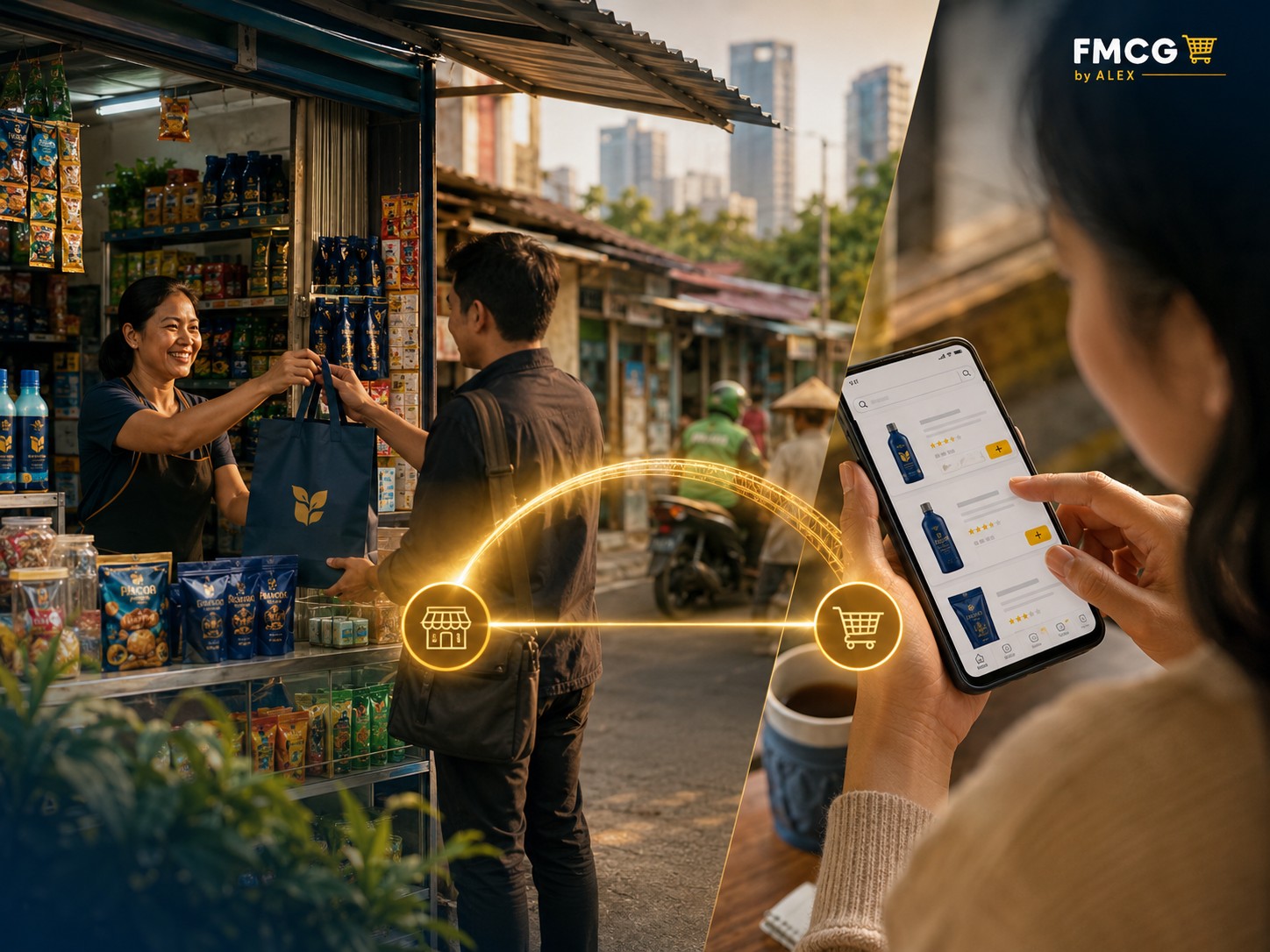 Traditional trade and local delivery networks remain the lifeblood of Indonesian FMCG.
For small brands, the smartest approach is rarely online only or offline only. It is a controlled hybrid.
Online creates visibility, proof, reviews, repeat orders and learning. Offline creates trust, trial, habit and local presence. The two should feed each other.
A customer tastes the product at a café, follows the brand on Instagram and later orders a bundle online. A marketplace buyer asks where to find it nearby. A reseller posts a WhatsApp story that drives both direct orders and offline sales. A local store carries the product, and the founder posts that store location to followers in the area.
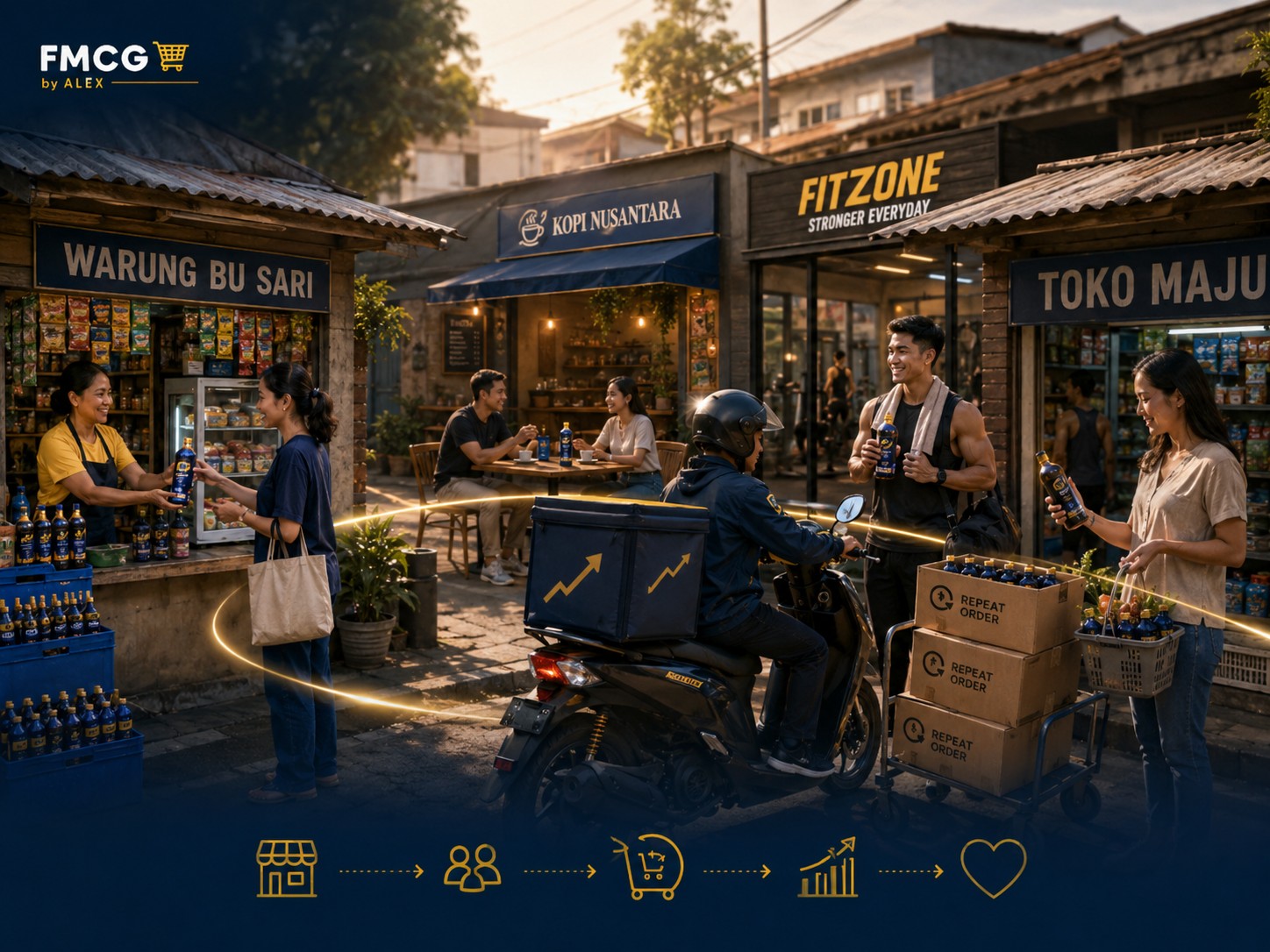 A controlled hybrid model bridges digital visibility and physical availability.
This is how a small brand stretches money.
Every activity should create another activity.
Sampling creates content. Content creates leads. Leads create trial. Trial creates reviews. Reviews help resellers. Resellers create reach. Offline visibility increases online trust. Online reviews help offline pitches.
Nothing should be wasted.
Start With Friendly Channels Before Chasing Modern Trade
Modern trade is attractive. There is no shame in wanting your brand in the big chains. Seeing your product on a serious retail shelf is a proud moment. Founders deserve that moment.
But modern trade is not always the right first step.
Large retailers require readiness. Packaging, barcodes, permits, supply consistency, margins, trade terms, promotion planning, service levels, admin discipline and patience. Sometimes a lot of patience. The kind of patience that makes you question your life choices while waiting for a buyer reply.
For many small Indonesian brands, the better first step is friendly channels.
Friendly channels are places where the decision-maker is close enough to talk to.
Independent cafés, local grocery stores, gyms, salons, barbershops, community stores, campus canteens, small minimarkets, warung networks, food stalls, pet shops, baby stores, offices and local specialty retailers.
These channels allow you to learn. You can explain the product directly. You can test a small quantity. You can observe whether people buy. You can adjust display. You can ask the owner what customers say. You can follow up quickly.
The goal is not to get hundreds of outlets immediately. The goal is to get outlets that actually reorder.
A small brand with 20 active outlets is healthier than a brand with 200 outlets where the product sits untouched like a museum exhibit.
When approaching these outlets, keep the pitch simple. The owner wants to know what the product is, who buys it, what the selling price is, what margin they make, how fast it might move, and what support you will provide. They do not need a 37-slide presentation about “transforming the future of snacking in Southeast Asia.” They need to know whether this product will make them money without creating problems.
Reduce their risk. Start with a small quantity. Provide a clear display. Give them a simple sentence to explain the product. Feature their outlet on your social media. Visit again. Check stock. Ask what happened. Improve.
Offline does not work if you drop stock and disappear.
Shelves do not sell by magic. If they did, every FMCG sales manager would be retired and drinking coconut water somewhere.
Resellers Can Be Powerful, But They Are Not a Substitute for Strategy
Indonesia is a strong reseller market. WhatsApp groups, Instagram sellers, TikTok sellers, community sellers, arisan groups, office sellers, school networks and local neighbourhood sellers can move product faster than a small brand could alone.
A reseller network can be a wonderful thing.
It can also become chaos wearing your logo.
If resellers get unclear prices, they fight. If they discount too aggressively, your brand suffers. If they do not understand the product, they mis-sell. If they do not have content, they become silent. If the margin is too small, they lose interest. If the margin is too high, you lose profitability. If there are no rules, the loudest reseller becomes the brand manager, which is rarely ideal.
A reseller programme needs structure.
Not corporate bureaucracy. Just clarity.
What is the consumer price? What is the reseller price? What is the minimum order? What content can they use? What claims are allowed? What bundles should they push? How do they reorder? What happens if stock is damaged? How do they explain the product? Who do they contact with questions?
A reseller without support is just a person holding inventory and hope.
Give them tools. Photos, short videos, captions, FAQs, product benefits, testimonial screenshots, objection handling and campaign ideas. Make it easy for them to sell.
But also protect the brand. If a reseller damages pricing, makes false claims, sells old stock or creates customer complaints, deal with it quickly. Growth that damages trust is not growth. It is future repair work.
Sampling Is Not a Strategy Unless Something Happens After the Sample
Sampling is powerful in FMCG because taste, texture, smell and experience matter. This is especially true in food and beverage. A person can ignore your ad, but if they taste something delicious, you have a chance.
But sampling can also be a beautiful waste of money.
Many small brands give away samples, people taste them, smile, say “enak,” and then vanish forever into the Indonesian traffic system.
Sampling without follow-up is not marketing. It is catering.
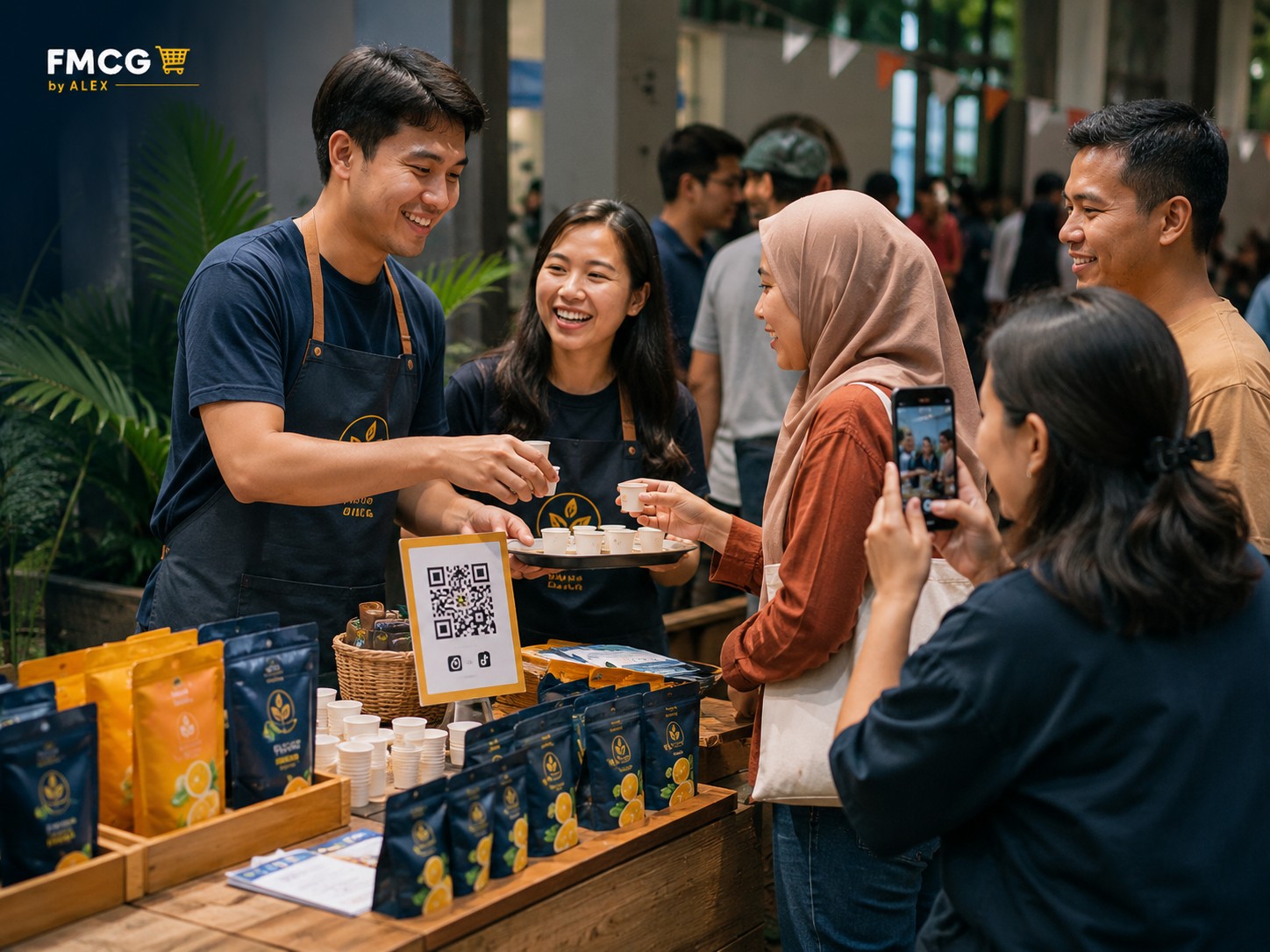
Every sampling activity needs a next step. If you sample in an office, offer an office bundle. If you sample in a gym, give a member code. If you sample at a café, make sure the product is available at the counter. If you sample in a community, collect WhatsApp contacts with permission. If you sample at a bazaar, push a starter pack. If you sample to a store owner, agree on a trial quantity.
 Sampling should be designed as a conversion gate, not just free catering.
A sample should open a door. It should not be the whole house.
The same applies to bazaars and events. Many brands join events, sell a little, hand out samples and go home tired. That is fine, but the real value should be bigger. Use events to collect leads, test pricing, get reviews, create content, meet resellers, understand objections and identify which consumer segment responds.
If an event only gives you one-day sales, it may not be worth it. If it gives you content, contacts, feedback, resellers, reviews and repeat buyers, then the same booth suddenly becomes much more valuable.
Stretching the Budget Means Making Every Rupiah Work Twice
When money is limited, every activity must do more than one job.
If you visit an outlet, make content from the visit. If you run sampling, collect contacts and reviews. If you send products to a micro-influencer, ask for raw video you can reuse. If you print flyers, add a QR code for ordering. If you create a bundle, use it for marketplace sales, WhatsApp sales and reseller campaigns. If you join a community event, negotiate not just a booth, but also social media mentions, photos, video rights and direct selling access.
This is the mindset small brands need.
Large companies can afford campaigns that are only about awareness. Small brands need awareness, trial, proof, content and sales from the same activity.
This is not because small brands should be cheap. It is because small brands must be efficient.
A small brand saying “this is only for branding” too often is usually a small brand about to discover that suppliers do not accept brand awareness as payment.
Be Careful With Discounts, Because They Are Addictive
Discounts are tempting because they work quickly.
A discount creates movement. It helps conversion. It gives people a reason to buy now. It makes online platforms happier. It gives resellers something to shout about. It can help clear stock.
But discounts are like spicy sambal. Useful in the right amount. Painful when overused.
If you discount too often, consumers wait. If you discount too deeply, the normal price looks wrong. If you discount direct-to-consumer while resellers and offline outlets are trying to sell at normal price, they become annoyed. If you discount without understanding margin, you may be buying sales rather than making money.
Small brands should add value before cutting price.
Bundles, samples with minimum purchase, free delivery thresholds, limited editions, starter packs, refill packs, subscription benefits, loyalty rewards and community offers can all create value without training consumers to only buy when the price drops.
A discount should have a specific job. Trial, clearance, seasonal push, bundle conversion, new customer acquisition or retail support.
If the discount has no job, it is probably panic wearing a promo badge.
WhatsApp May Be More Important Than Your Website
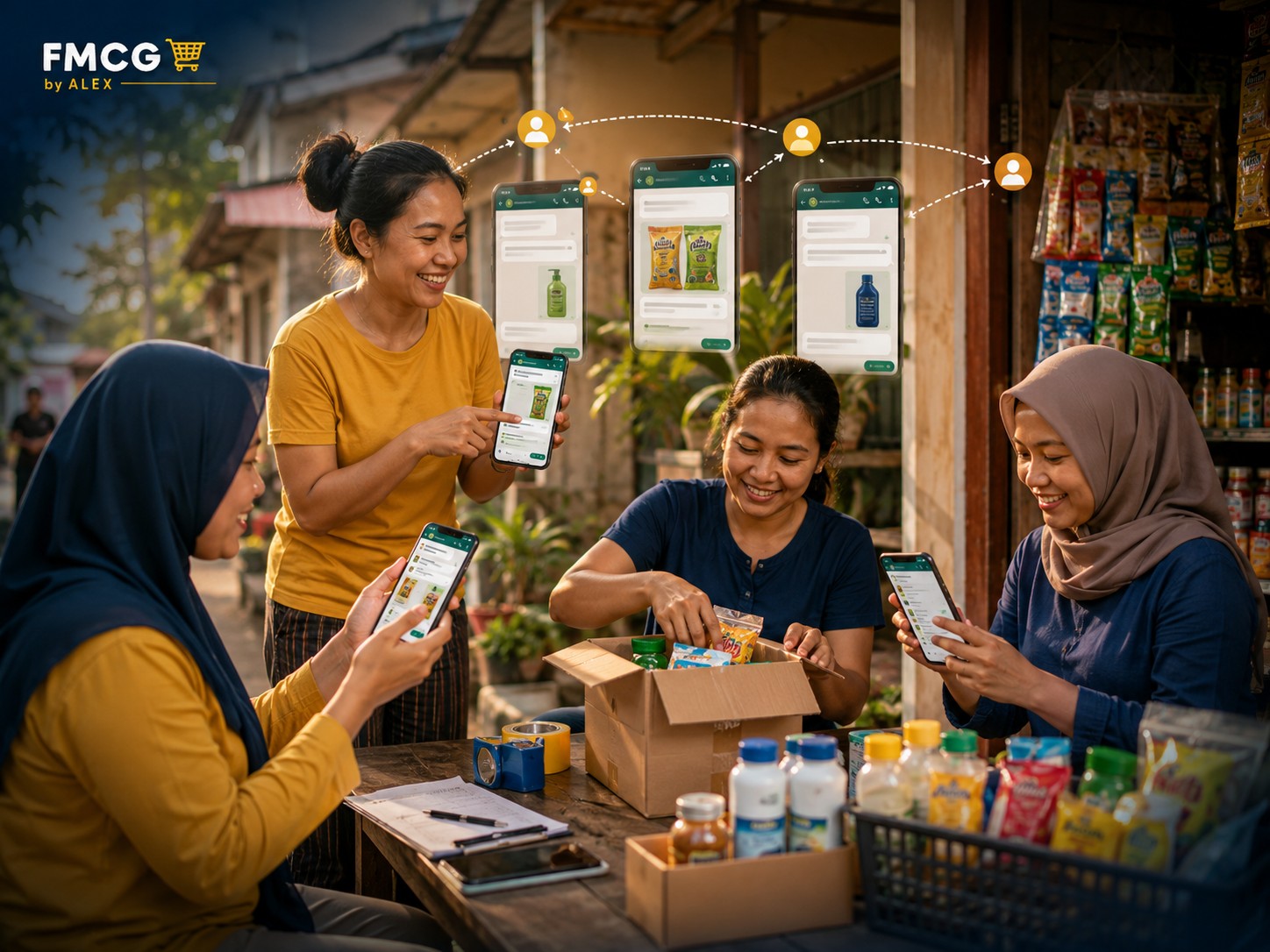
A polished website is nice. A big Instagram following is nice. Marketplace presence is important. But for many small Indonesian FMCG brands, WhatsApp is where the real business happens.
WhatsApp is where customers ask questions. It is where resellers reorder. It is where outlet owners reply. It is where communities share recommendations. It is where repeat purchase can be nudged at the right moment.
 WhatsApp is where recommendations and reseller networks drive real traction in Indonesia.
A small brand does not need a complicated CRM at the start. A disciplined WhatsApp system can already create real value.
But discipline matters.
Do not spam everyone with the same message. Segment people. Customers, repeat customers, potential resellers, active resellers, outlet owners, event leads and community contacts should not all receive identical broadcasts.
Send useful messages. New stock, reorder reminders, bundle ideas, recipes, use cases, outlet locations, reseller materials, seasonal offers and customer stories. Make it feel like a relationship, not a siren.
For repeat FMCG products, timing matters. If the product usually lasts two weeks, remind after ten days. If it is a lunchbox product, message before the school week. If it is a monthly routine, create a monthly bundle. If it is seasonal, start before the season, not when everyone has already spent their money.
Followers are nice. Buyers are better. Repeat buyers are the reason the business survives.
The Real Goal Is Repeat Purchase
This is where many small brands lose focus.
They chase first sales, new followers, reseller sign-ups, event appearances and outlet listings. These things matter, but they are not the final goal.
The real goal is repeat purchase.
A person who buys once may simply be curious. A person who buys twice is interested. A person who buys three times is starting to become part of the business.
Repeat purchase is what makes marketing affordable. It is cheaper to remind a happy customer than to convince a stranger. It is easier for resellers to sell a product that customers request again. It is easier to convince outlets when the product moves regularly. It is easier to plan production when demand is not random.
Design for repeat from the beginning.
Make reordering easy. Put QR codes on packaging. Use WhatsApp follow-up. Offer bundles. Keep quality consistent. Keep the hero SKU available. Encourage referrals. Create routines. Reward loyalty carefully. Do not change the product every five minutes because someone’s uncle suggested a new flavour.
A small brand that builds repeat slowly can become strong. A small brand that only chases new buyers with discounts will always need more money.
And needing more money every month is not a growth strategy. It is cardio with invoices.
Build Proof Before You Try to Scale
At some point, every ambitious brand wants to scale.
That is good. Indonesia is a large market and strong brands should not stay small forever. Before scaling, the brand should have proof.
Proof that the hero SKU sells. Proof that consumers reorder. Proof that at least one channel works. Proof that the price supports margins. Proof that production can keep up. Proof that packaging survives delivery. Proof that resellers can sell. Proof that outlets reorder. Proof that content can create demand. Proof that the founder is not simply confusing activity with traction.
This proof does not need to be perfect, but it needs to be real.
A 90-day focused push can create that proof. Choose one hero SKU, one beachhead market, a few online channels, a small number of friendly offline outlets and a disciplined follow-up system. Test content. Collect reviews. Run sampling with a next step. Support the best resellers. Track reorder. Improve the offer. Stop what does not work.
After 90 days, the brand may not be famous. That is fine. Fame is expensive and often overrated. Evidence is better.
Evidence helps you approach distributors. Evidence helps you pitch retailers. Evidence helps you raise funding. Evidence helps you improve production. Evidence helps you decide what not to do.
A small brand does not need to look big. It needs to become investable, distributable and repeatable.
Final Thought: Small Brands Win by Staying Close to the Market
The Indonesian FMCG market is full of opportunity for UMKM and SME-sized brands. Consumers are open to new products. Digital tools are accessible. QRIS makes transactions easier. Marketplaces provide reach. Social media gives small brands a voice. Offline channels remain fragmented but full of possibilities. Reseller networks can create momentum. Communities can build trust.
But the market does not reward a brand simply because the founder works hard.
Many founders work hard. Some work so hard they forget to ask whether the strategy makes sense.
The brands that win are the ones that combine energy with discipline.
They focus before expanding. They protect margin before chasing volume. They build trust before demanding scale. They use online to learn and offline to build habit. They turn reviews into proof. They turn sampling into follow-up. They turn resellers into partners, not chaos. They build local density before pretending to be national. They measure repeat purchase, not just noise.
Most importantly, they stay close to the customer.
That is the small brand advantage. A multinational may have a bigger budget, but it is often far from the consumer. A small founder can still talk to buyers, visit outlets, read every review, reply to WhatsApp messages, notice complaints, adjust quickly and build relationships one by one.
That closeness is valuable. Use it before the business becomes too large and meetings start multiplying like mushrooms after rain.
If you are a small FMCG brand in Indonesia, you do not need to wait for a huge marketing budget to begin. You need focus, discipline and a willingness to learn faster than your competitors.
Start with one product. Win one use case. Build one cluster. Create one group of repeat customers. Support one serious reseller network. Prove one channel. Then expand.
Not because you are guessing, but because you have evidence.
That is how small brands grow without burning money they do not have.
One product, one outlet, one review, one reseller, one repeat order and one honest lesson at a time.
Tools for this topic
View shopFMCG Growth Systems (Hardcover)
A tactical leadership guide for building scalable FMCG growth engines.
Related content
When the Shopper Says 'Too Expensive': How Price-Pack Architecture Can Save Your FMCG Brand in Indonesia
A practical and witty guide to price-pack architecture in Indonesia, showing how FMCG brands can stay affordable, protect margins and keep shoppers buying when demand is under pressure.
How to Grow an FMCG Brand with Little to No Money — and Turn Around Declining Sales
Declining sales in FMCG doesn’t usually feel dramatic at first. It feels… confusing. Here is a practical, low-budget playbook to stop the slide and rebuild growth with clarity, focus, and relentless execution.
How to Know Whether a Sales Visit Actually Makes Money Without Sacrificing Your Brand
Improving sales route profitability sounds like an obvious objective for any FMCG company. But aggressive cost-to-serve cuts and minimum order sizes can kill a growing brand. Here is how to evaluate true visit economics, protect developing outlets, and balance route efficiency with long-term brand building in Southeast Asia.
How to Build a Better FMCG Route-to-Market
Designing channel roles, distributor economics, and service levels in one RTM framework.