Supply ChainBookEditor's pick
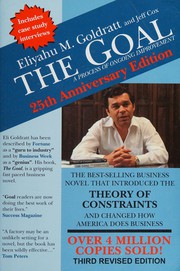
The Goal
Eliyahu M. Goldratt, Jeff Cox
A business novel set in a struggling factory that teaches the theory of constraints: find the bottleneck, protect it, and stop optimising parts of the system in isolation.

Category
In FMCG, supply chain performance shows up on the shelf: availability, freshness, cost-to-serve and the working capital tied up in inventory. Commercial teams feel it first when a promotion runs short or a launch is delayed, which is why sales and marketing managers benefit from understanding forecasting, sales and operations planning, and the logic of constraints.
This section combines operations classics that explain flow and bottlenecks with practical books on forecasting, inventory and S&OP. The forecasting titles help commercial teams interpret statistical baselines and challenge them sensibly; the S&OP titles describe the monthly planning rhythm that connects demand, supply and finance.
These are editorial recommendations rather than tested implementation guides. Many titles come from manufacturing or retail-logistics settings, and each entry notes where its advice needs adapting for short shelf life, seasonal peaks or archipelago logistics.
Supply chain and demand planners, S&OP leads, operations and logistics managers, and commercial managers who need to collaborate with planning on forecasts and promotions.
Showing all 11 resources
Eliyahu M. Goldratt, Jeff Cox
A business novel set in a struggling factory that teaches the theory of constraints: find the bottleneck, protect it, and stop optimising parts of the system in isolation.
Thomas F. Wallace, Robert A. Stahl
A practical handbook for running a monthly sales and operations planning cycle that aligns demand, supply and the financial plan, with detailed guidance on meetings and roles.
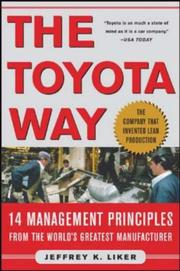
Jeffrey K. Liker
Jeffrey Liker's account of the management principles behind Toyota's production system, from pull systems and levelled workloads to problem solving, supplier partnership and long-term thinking.
Charles W. Chase
A consumer-goods-oriented guide to forecasting from downstream demand signals such as point-of-sale data, covering forecast value added, collaboration and the modelling of promotions.
David Frederick Ross
A technical text on planning and controlling distribution networks and inventory flow, including distribution requirements planning, for supply chain and logistics managers.
Rob J. Hyndman, George Athanasopoulos
A statistics-grounded introduction to time series forecasting, from simple benchmarks and exponential smoothing to ARIMA, regression and hierarchical forecasts, taught with R code.
David J. Piasecki
A plain-spoken practitioner's guide to inventory control covering forecasting, lot sizing, safety stock and ordering systems, with worked formulas for distribution and manufacturing stock.
W. Edwards Deming
W. Edwards Deming's management classic on quality, variation and the responsibility of leadership, with principles that challenge quotas, inspection and price-driven purchasing.
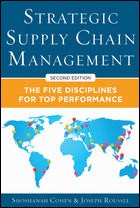
Shoshanah Cohen, Joseph Roussel
An executive-level view of supply chain as a source of competitive advantage, showing how strategy, planning, sourcing and execution fit together and connect to business results.
Sunil Chopra, Peter Meindl
A university-level supply chain textbook that frames strategy, network design, inventory, sourcing and forecasting around a shared set of drivers, useful as a reference for FMCG planners.
Gwynne Richards
A practitioner's guide to running a warehouse covering layout, storage, picking, equipment, systems, people and performance measurement, with attention to cost and efficiency.
Reading works best alongside a live problem. These articles and resources cover the same ground in practical, operator-level terms.
Look at the forecasting and S&OP titles in this section. They explain statistical forecasting, demand-driven planning and the monthly cycle that reconciles commercial and supply plans. Pair them with FMCG by Alex's article on forecasting and supply chain for a commercial view.
A little operations literacy goes a long way. Knowing how constraints, lead times and inventory policy work makes it easier to agree realistic promotions and launch dates with supply.
Yes for factories and warehouses, less so for sales teams. The lean titles are listed for operations readers and for commercial leaders who want to understand continuous-improvement language.
As an Amazon Associate I earn from qualifying purchases. Purchases are completed on Amazon.com. Affiliate disclosure