
The Weather App Has Joined the Sales Meeting
How heatwaves and weather volatility are quietly rewriting FMCG forecasting, demand planning, revenue growth management, pricing, and supply chains.
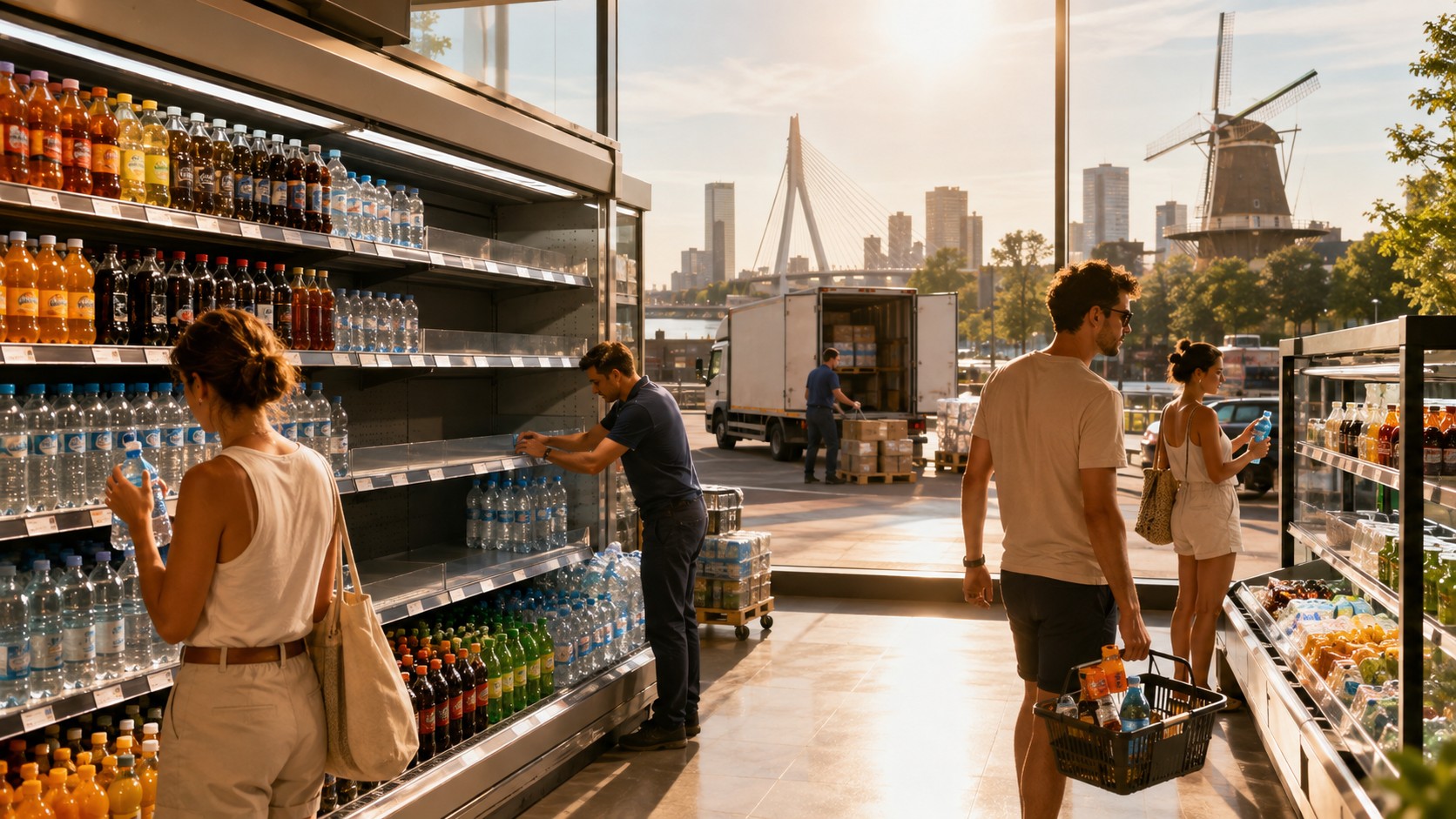
The Weather App Has Joined the Sales Meeting
How heatwaves are quietly rewriting FMCG forecasting, demand, pricing and supply chains
For most of FMCG history, the weather forecast occupied a fairly modest position in corporate life. Sales managers checked it before planning a customer golf day, Marketing checked it nervously after spending several million euros on a summer campaign featuring impossibly blue skies, and everybody checked it before deciding whether the annual company barbecue required a tent.
Demand Planning, meanwhile, had more serious things to look at.
Historical sales. Promotional calendars. Distribution changes. Retailer forecasts. Seasonality. Pricing. Holidays. Events. Last year. The year before last. The year before that. An impressive quantity of information was fed into increasingly sophisticated forecasting systems, producing numbers that everyone argued about before eventually agreeing to call “the forecast.”
Then Thursday turns out to be 37°C.
The spreadsheet says the company needs 38 pallets of bottled water.
The weather app suggests that most of the population will spend Thursday attempting to climb inside a refrigerator.
One of these pieces of information probably deserves a little more weight than it used to.
Extreme weather is gradually changing from something FMCG companies explain afterwards into something they need to plan around beforehand. This is not simply because hotter summers sell more ice cream and bottled water. We have known that approximately since the invention of ice cream and bottled water.
What is changing is the scale and interconnectedness of the effect.
A severe heatwave can change consumer demand, shopping occasions, retail traffic, agricultural output, electricity consumption, refrigeration costs and transport conditions at virtually the same time. The weather can push sales up at the front of the business while pushing costs up at the back.
That makes it rather more interesting than a seasonal marketing opportunity.
It makes weather a commercial variable.
The distinction matters.
A normal summer sales plan already assumes that July is warmer than February. What it does not necessarily understand is the difference between a pleasant 25°C Saturday and five consecutive days above 35°C.
Consumers understand that difference perfectly well.
They do not experience the monthly average temperature. They experience Tuesday afternoon.
And Tuesday afternoon may cause them to behave very differently from the consumer represented by the historical average.
When temperatures climb sharply, bottled water and chilled beverages are obvious beneficiaries, but the changes quickly spread beyond beverages. Iced coffee becomes more attractive. Ice cream accelerates. Fresh fruit, salads and lighter meals may gain occasions. Heavy meals become less appealing. Cooking becomes less attractive, particularly in homes where switching on an oven feels like voluntarily joining the heatwave.
Even the humble cup of coffee can find itself negotiating with the weather. The consumer still wants caffeine; she simply becomes less committed to receiving it at approximately the temperature of molten steel.
During recent periods of extreme heat, iced coffee has been one of the categories showing how quickly these habits can move. What was once a relatively niche format has become part of a much broader change in how consumers adapt familiar occasions to hotter conditions.
That is the first important commercial point. Weather does not necessarily destroy an occasion. Often it changes the format required to serve it.
The morning coffee remains.
The hot coffee loses.
The afternoon snack remains.
Chocolate starts looking nervous.
Dinner remains.
The oven gets the evening off.
This creates opportunities, but it also makes traditional category boundaries less useful. A consumer looking for refreshment may move between water, soft drinks, iced tea, functional beverages and chilled coffee. Someone looking for a light lunch may choose between salads, sandwiches, yogurt, fruit or a snack product substantial enough to pretend it was lunch all along.
The commercial battle is increasingly between occasions rather than only products sitting next to one another on a shelf.
Weather can rearrange those occasions very quickly.
That presents an awkward problem for forecasting because FMCG supply chains are not famous for changing direction at the speed of a weather app.
A supermarket shopper can decide at 3:30 in the afternoon that she wants six bottles of water.
The factory cannot decide at 3:30 that afternoon to produce them, bottle them, palletise them, place them in a distribution centre and somehow have them waiting in the supermarket by four.
Consumers are wonderfully agile in this respect.
Factories are less spontaneous.
This means the commercial value of weather data lies not in explaining why Thursday’s sales were high on Friday morning. By then everybody already knows. The useful question is whether the company saw Thursday coming early enough to move stock on Monday.
That is a completely different capability.
Imagine that the forecast calls for exceptional temperatures across the south of the Netherlands later in the week. A traditional national demand plan may show adequate inventory. The company technically has enough water.
Unfortunately, much of it is sitting in the wrong distribution centre.
This is the kind of detail that tends to ruin otherwise encouraging PowerPoint presentations.
Having enough stock nationally is not the same as having enough stock where people intend to buy it.
Anyone who has worked in FMCG knows that availability is less about owning products than about positioning them five minutes ahead of the consumer.
Weather makes those five minutes harder.
It also changes where the consumer chooses to shop.
During extreme heat, the journey itself becomes part of the purchasing decision. A consumer who would normally walk through a town centre may postpone the trip, shop later, use a nearby convenience outlet or order groceries online. Someone who planned a large weekly shop may decide that carrying twelve kilograms of groceries across a car park at 36°C represents an unnecessary test of character.
That means weather does not only affect the basket.
It affects the channel.
For e-commerce and quick commerce, this is particularly interesting. A sudden hot period can produce very specific, geographically concentrated demand for cold beverages, ice cream, ice, fruit, barbecue products and convenience foods. Digital retailers can respond to that much faster than traditional promotional calendars.
A supermarket app does not need to continue showing exactly the same homepage in Groningen and Eindhoven if Eindhoven is experiencing extreme heat and Groningen is not.
A beverage brand does not need to spend its digital media budget uniformly across the country.
An ice-cream brand can increase activity where the consumption occasion suddenly becomes relevant.
A soup brand can perhaps quietly keep its money.
The technology for this already exists. The greater obstacle is often organisational.
FMCG businesses have become very good at collecting real-time data and then feeding it into decision-making structures created when fax machines were considered fast.
A company may know on Monday that Thursday will be exceptionally hot, yet changing a promotional banner can still require approval from six people, two agencies and somebody who is currently on holiday.
The weather does not participate in the approval process.
It proceeds directly to Thursday.
This is why weather-sensitive commercial planning eventually becomes an organisational issue rather than a meteorological one. The question is not whether the data exists. The question is who is allowed to do something with it.
Demand Planning needs to translate it into volume.
Supply Chain needs to decide whether inventory should move.
Sales needs to prepare customers.
Marketing needs enough flexibility to adjust spending.
E-commerce needs to change visibility.
Finance needs to understand what all this additional excitement will cost.
And that final point is important because the revenue side of hot weather is only half the story.
For commercial teams, a heatwave can look wonderful. Bottled water flies. Chilled drinks sell out. Ice cream disappears. Retailers place urgent orders and everyone begins circulating photographs of empty shelves as evidence of extraordinary consumer demand.
Operations may have a slightly different interpretation.
Cold products need to remain cold.
Warehouses need cooling.
Retailers need refrigeration.
Vehicles need to maintain temperature.
Factories consume energy.
Employees work in more difficult conditions.
The hotter the weather becomes, the harder much of that infrastructure needs to work.
The ice-cream company therefore faces one of FMCG’s more elegant contradictions: the exact weather that creates record consumer demand also makes serving that demand more expensive.
The Sales Director sees a fantastic summer.
The Operations Director sees an electricity bill.
Finance would prefer everybody to stop celebrating until the gross margin has been checked.
Heat can also create problems much further upstream.
Agriculture remains inconveniently dependent on nature. Crops respond to heat, drought and water availability regardless of the assumptions contained in the annual operating plan. Dairy animals experience heat stress. Agricultural yields and quality can change. Water becomes more contested. Harvest patterns move.
For food and beverage businesses, this means weather can affect both the volume consumers want and the availability or cost of the ingredients needed to produce it.
A company may enjoy stronger demand for fresh, light products precisely when agricultural conditions are making some of those products more difficult to source.
The commercial opportunity and the procurement problem can arrive in the same week.
Europe’s river system adds another layer.
The Rhine is particularly important for the Netherlands and Germany because it is not simply a pleasant geographical feature. It is one of Europe’s major transport arteries. Commodities, fuel, chemicals and industrial materials move along it in enormous quantities.
When water levels fall sufficiently, barges may have to reduce their loads.
The river does not necessarily close. It simply starts charging, indirectly, for being shallow.
Less cargo per vessel can mean additional journeys and higher freight costs. Those increases move through industrial and consumer supply chains until, eventually, they become part of the cost of something sitting on a supermarket shelf.
The shopper never sees the river.
She sees that the product now costs €1.09 instead of €0.99.
Behind those ten cents may sit a remarkable collection of causes: drought, energy prices, commodity markets, transport constraints, packaging, labour and several organisations explaining that unfortunately they can no longer absorb the increase.
An FMCG product is often wonderfully simple from the consumer’s perspective.
Internally, it can be international diplomacy with a barcode.
The Netherlands makes a particularly useful case study because so much of the FMCG system sits close together. Intensive agriculture, food manufacturing, major ports, dense supermarket networks, river transport, sophisticated distribution centres and e-commerce all operate in a relatively small country.
Weather can therefore move through the system remarkably quickly.
A heatwave influences consumers.
It influences farms.
It influences energy.
It influences transport.
It influences retailers.
And because Dutch consumers consider discussing the weather a national responsibility, everybody will also be extremely well informed about it.
There are regional subtleties too. A sunny weekend on the coast may create a very different consumption pattern from the same temperatures inland. Tourist destinations can experience demand spikes not visible in the national average. Cities behave differently from rural areas. Stores near parks, beaches and transport hubs may see entirely different baskets from suburban supermarkets.
This is where national averages become dangerous.
A forecast can be perfectly correct at country level while being commercially wrong in every important location.
That is one of the reasons weather data becomes more interesting when combined with store-level and regional demand data.
The objective should not be to create another colourful dashboard showing little suns above a map of the Netherlands.
The world has enough dashboards.
The objective is to improve decisions.
Perhaps bottled-water sales begin accelerating meaningfully above a certain temperature. Perhaps the effect becomes stronger after three consecutive hot days. Perhaps iced coffee responds particularly strongly among urban convenience shoppers. Perhaps rainfall affects store traffic differently on weekdays and weekends. Perhaps extreme temperatures make online ordering more attractive.
Those relationships can be measured.
Once they are understood, weather stops being an anecdote and becomes an input.
That does not mean forecasting suddenly becomes easy.
There will always be the additional problem that weather forecasts are themselves forecasts.
Anyone who has organised a Dutch barbecue knows this.
A company can prepare for sunshine and receive rain. It can move additional stock ahead of a predicted heatwave that turns out to be merely pleasant. Forecasting weather-sensitive demand therefore introduces another layer of uncertainty rather than eliminating uncertainty entirely.
But FMCG planning has never required certainty.
It requires making a better decision than the one you would have made without the information.
There is an important distinction between knowing exactly what will happen and knowing enough to prepare differently.
The same argument becomes even more powerful in Indonesia.
There, weather does not only influence consumer demand. It can directly affect route to market.
Heavy rainfall can change traffic conditions dramatically. Flooding can make individual roads or areas inaccessible. Delivery schedules move. Sales representatives cannot reach outlets. Traditional-trade replenishment slows. Consumers may stay closer to home or shift towards delivery.
A weather event can therefore alter both sides of the transaction.
The shopper behaves differently, while the distributor’s ability to serve that shopper also changes.
A bottled-water company may see demand increase in one region while simultaneously facing difficulty moving enough stock into it.
A national inventory report can say everything is fine.
The local salesperson standing beside an empty store shelf may have another view.
Indonesia’s geography makes regional modelling particularly important. Jakarta, Surabaya, Medan, Makassar and Bali should not be expected to behave as one meteorological market simply because they appear together in the national sales report.
Rainfall in Surabaya is not merely something that makes a sales representative wet.
It may alter store traffic and outlet accessibility.
Extreme heat in Jakarta is not only uncomfortable.
It may change hydration occasions and chilled-beverage demand.
Flooding is not merely a logistics story.
It becomes a sales story when products cannot reach the places where consumers are trying to buy them.
This is why weather belongs increasingly close to route-to-market planning.
The idea is not especially futuristic.
FMCG companies already incorporate holidays, promotional periods, salary cycles, Ramadan, school calendars, sporting events and local festivals into forecasts because these events influence behaviour.
Weather influences behaviour too.
It has simply been treated differently because it was easier to blame afterwards than integrate beforehand.
There is almost a tradition around this.
If summer sales disappoint, the weather was bad.
If beverages exceed forecast, the weather was unusually good.
If soup underperforms, winter was too mild.
If barbecue products remain in warehouses, it rained.
The weather has become FMCG’s most dependable excuse because it never attends the monthly performance review to defend itself.
Perhaps the more useful approach is to stop inviting it only after something has gone wrong.
If local weather forecasts can improve the accuracy of demand planning, warehouse allocation, transport preparation, retail activation and digital marketing, they should sit alongside the other commercial inputs already being used.
Not because every temperature change requires an emergency meeting.
And certainly not because the organisation needs a new department called Global Meteorological Revenue Excellence.
FMCG has enough departments.
It simply means recognising that historical seasonality and actual weather are different things.
“Summer” is a planning assumption.
“37°C in Eindhoven on Thursday” is information.
The most sophisticated companies will increasingly connect the two.
Weather-aware forecasting may initially improve the obvious seasonal categories, but the bigger opportunity lies in understanding second-order effects: the changing meal occasion, the channel shift, the regional stock requirement, the additional logistics cost and the interaction between a promotion and unusual weather.
A promotion that performs normally at 22°C may behave completely differently at 35°C.
That raises another interesting question for Revenue Growth Management.
If extreme weather changes willingness to buy, product mix and channel choice, should promotional strategy remain fixed?
Do you really need to offer a deep discount on bottled water during a period when the greatest problem is keeping it on the shelf?
Should promotional funding be redirected?
Could retailers and suppliers use weather to manage categories more intelligently rather than automatically activating a promotional calendar agreed six months earlier?
That may become one of the more interesting implications.
Weather data should not simply help businesses sell more.
It may help them understand when they do not need to discount as much.
A thirsty consumer standing in a convenience store at 35°C is not conducting an extensive price-elasticity study.
Availability may temporarily matter more than promotion.
That is useful information for anyone responsible for margins.
The same goes for assortment.
Hotter conditions may strengthen smaller immediate-consumption packs in some channels while larger take-home packs grow elsewhere. E-commerce baskets may favour multipacks because consumers would prefer one driver to carry the water upstairs. Convenience channels may benefit from cold single-serve formats.
One weather event can therefore create several different price-pack opportunities depending on where the consumer shops.
This is why the conversation ultimately becomes bigger than forecasting.
Weather touches Revenue Growth Management, category management, channel strategy, portfolio design and route to market.
And the hotter, more volatile the climate becomes, the less useful it is to treat weather as a seasonal footnote.
None of this requires FMCG managers to become amateur meteorologists.
That would probably make matters worse.
The business simply needs to become better at translating weather information into commercial actions.
If a period of extreme heat is likely, where will demand accelerate?
Which categories will gain?
Which ones may weaken?
Where is inventory located?
Can enough stock reach the relevant stores?
What happens to cold-chain costs?
Does media activity need to change geographically?
Are retailer promotions still appropriate?
Could agricultural or freight conditions create supply-side pressure at the same time?
These questions should increasingly become part of normal commercial planning rather than emergency conversations after shelves begin emptying.
Because the climate does not politely choose whether to affect Sales or Supply Chain.
It affects both.
That may be the most important change of all.
For a long time, weather was viewed mainly as an external influence on consumer demand. A sunny weekend was good for some categories and bad for others.
Now it increasingly acts on the complete FMCG P&L.
It can increase revenue.
Increase COGS.
Increase freight.
Increase energy usage.
Change product mix.
Change channel mix.
Change availability.
And alter promotional effectiveness.
All during the same week.
That is considerably more interesting than “hot weather sells ice cream.”
The companies that respond best will probably not be the ones with the most sophisticated weather dashboard. They will be the ones capable of acting while the information is still useful.
Because once the shelves are empty, everyone suddenly becomes an expert on what should have happened.
Sales will say it expected demand to be stronger.
Supply Chain will say nobody told them.
Marketing will point out that the campaign performed extremely well.
Finance will ask why emergency freight destroyed half the margin.
Demand Planning will quietly reopen the forecast from Monday.
And somewhere on the screen, the weather app will still say 37°C.
FMCG managers have spent decades blaming the weather when their forecast was wrong.
The more useful idea may be remarkably simple.
Put the weather in the forecast before it gets the chance.
Tools for this topic
View shopThe FMCG Pricing Handbook (eBook)
A practical handbook to design profitable price-pack architecture.
FMCG Revenue Growth Sprint
A practical RGM sprint program for commercial teams.
Related content
The Discount That Couldn't Make the Consumer Hungry
When FMCG volume falls, the standard response is familiar: reduce the price, increase promotions and offer more product. But what happens when consumers still do not eat more? A discount can improve affordability, but it cannot manufacture appetite.
Your Product Just Got a School Report
Under BPOM Regulation No. 10 of 2026, Indonesia has introduced front-of-pack Nutri-Level grading. Here is how sugar, salt, and fat grades (A to D) will turn reformulation into brand strategy, category management, and a front-of-pack marketing battle.
Hiring Trends in Indonesia's FMCG Sector (2025-2026)
Indonesia's FMCG hiring market in 2025-2026 is shifting from volume hiring toward capability-led recruitment across sales, brand, e-commerce, and supply chain.