Trade MarketingBookEditor's pick
Why We Buy
Paco Underhill
Paco Underhill's observational study of how shoppers actually move, look and touch in stores, with practical lessons for layout, signage and display.

Category
Trade marketing sits between the brand plan and the shelf. It decides how promotions are structured, what the retailer's category looks like, and whether the work a field team does in store actually changes what shoppers buy. The books in this section cover the four ideas a trade marketer uses every week: how shoppers behave in store, how categories are managed, how merchandising is executed, and how promotions pay back.
Retail textbooks are included deliberately. Understanding how a retailer thinks about space, margin and assortment is the foundation for any category conversation, and a supplier who can speak in those terms is easier to work with. Behavioural-science titles are included because shelf layout and promotion mechanics are choice-architecture problems.
As elsewhere in the shop, these are editorial reading recommendations. We describe what each title covers and where it fits consumer goods, and we flag where the examples come from fashion, department stores or Western supermarkets rather than traditional trade.
Trade marketing managers, category managers, shopper insight and customer marketing teams, and key account managers who prepare category and promotion proposals for retailers.
Showing all 15 resources
Paco Underhill
Paco Underhill's observational study of how shoppers actually move, look and touch in stores, with practical lessons for layout, signage and display.
Peter Cheverton
Peter Cheverton's practitioner guide to identifying, planning for and managing profitable relationships with a supplier's most important customers.
Markus Stahlberg, Ville Maila
A practitioner-oriented guide to shopper marketing: understanding the path to purchase and building in-store and category programmes together with retailers.
Marshall Fisher, Ananth Raman
Wharton researchers show how data and analytics improve assortment, inventory and supply chain decisions in retail, with lessons for category planning and replenishment.
Charles W. Chase
A consumer-goods-oriented guide to forecasting from downstream demand signals such as point-of-sale data, covering forecast value added, collaboration and the modelling of promotions.
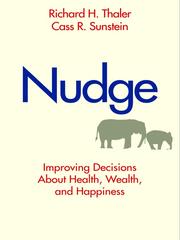
Richard H. Thaler, Cass R. Sunstein
Thaler and Sunstein's account of choice architecture: how defaults, framing and the layout of options steer decisions, with ideas that carry over to shelf and pack design.
Dan Ariely
Dan Ariely's experiments on how anchors, relative comparisons and the lure of free steer choices, with direct lessons for shelf pricing and promotions.
Doug Stephens
Doug Stephens argues that technology and shifting shopper expectations are redefining the role of the store, and considers what retailers and brands must change in response.
Emmett Cox
A business-oriented introduction to how retailers use data and analytics on customers, merchandise, pricing and promotions, showing suppliers what retail data teams can answer.
Barry Berman, Joel R. Evans
A university retail text that explains how retailers set strategy, choose locations, plan merchandise, price and run stores, giving suppliers a view of the buyer's world.
Michael Levy, Dhruv Grewal
A retail textbook organised around strategy, merchandise management and store management, with attention to financial performance and supplier relationships.
Julian Cummins, Roddy Mullin
A practical text on planning, running and evaluating sales promotions, covering consumer and trade promotion types and how to tie them to marketing objectives.
B. Joseph Pine II, James H. Gilmore
Pine and Gilmore argue that economic value moves from goods and services to staged experiences, an idea retailers use to design destinations rather than simply sell products.
Doug Stephens
An earlier book by Doug Stephens on how digital technology shifted power to the shopper and what retailers and brands must do to stay relevant.
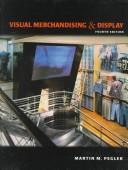
Martin M. Pegler
A reference on store design, windows, lighting, props and display techniques, written from a fashion and specialty retail perspective.
Reading works best alongside a live problem. These articles and resources cover the same ground in practical, operator-level terms.
Category management has few dedicated titles, so the section combines category and retail-analytics books with shopper-marketing and merchandising texts. Together they cover how retailers manage categories, how shoppers decide, and how promotions and displays should be built.
Start with the sales-promotion and behavioural-science titles, then pair them with the FMCG by Alex trade promotion optimisation article, which walks through post-event analysis. The books explain mechanics; your own baseline data tells you whether a promotion paid back.
The principles on assortment, space and shopper behaviour carry over. Specific store layouts and consumer norms often do not, and each entry notes where its examples come from.
As an Amazon Associate I earn from qualifying purchases. Purchases are completed on Amazon.com. Affiliate disclosure