Trade MarketingBookEditor's pick
Why We Buy
Paco Underhill
Paco Underhill's observational study of how shoppers actually move, look and touch in stores, with practical lessons for layout, signage and display.

Category
Brand teams in FMCG work with two kinds of evidence: what shoppers say in research and what they do at the shelf. The books in this section help with both. Brand-building and marketing-effectiveness titles explain why mental availability and distinctiveness drive growth, while behavioural-science and consumer-research titles give you better questions to ask and better ways to read the answers.
Marketing fundamentals are included because commercial managers who do not work in the brand team still make decisions that depend on positioning, segmentation and communication, especially when trade investment and brand investment compete for the same budget.
The list is an editorial reading recommendation. Some titles in this area are contested, for example in how strongly they claim that one approach to brand growth applies everywhere. We note those debates in each entry rather than presenting any single book as the answer.
Brand and marketing managers, insights and research teams, innovation leads, and commercial managers who share budgets or targets with the brand team.
Showing all 17 resources
Paco Underhill
Paco Underhill's observational study of how shoppers actually move, look and touch in stores, with practical lessons for layout, signage and display.
Al Ries, Jack Trout
Ries and Trout's classic argument that positioning happens in the buyer's mind, shaped by crowded communication and the places competitors already hold.
David A. Aaker
David Aaker's framework for brand equity and brand identity: how to define what a brand stands for, build it consistently and manage a portfolio of brands.
Clayton M. Christensen, Taddy Hall
Christensen and co-authors present jobs-to-be-done theory: customers hire products to make progress in a situation, so innovation should start from the job rather than demographics.
Jonah Berger
Jonah Berger's framework of six drivers of word of mouth, from social currency and triggers to emotion, public visibility, practical value and stories.
Youngme Moon
Youngme Moon's argument that competing brands converge by improving on the same dimensions, and that real difference comes from breaking category conventions.
Adam Morgan
Adam Morgan's study of challenger brands: how smaller competitors take on category leaders by thinking and behaving differently instead of copying them.
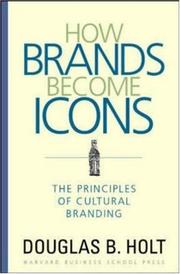
Douglas B. Holt
Douglas Holt's cultural branding model: brands become icons by addressing tensions in society through compelling myths, not by owning a benefit in the mind.
Chip Heath, Dan Heath
The Heath brothers' framework for making ideas understood and remembered, useful for sales stories, listing pitches and field-force communication.
Philip Kotler, Kevin Lane Keller
The standard marketing textbook, covering segmentation, positioning, the marketing mix, branding and planning, useful as a shared framework for commercial teams.
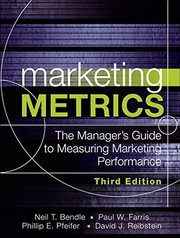
Paul W. Farris, Neil T. Bendle
A reference of the measures marketers and finance teams use, from market share, distribution and margins to promotion lift and the return on marketing spend.
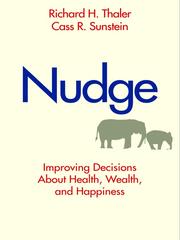
Richard H. Thaler, Cass R. Sunstein
Thaler and Sunstein's account of choice architecture: how defaults, framing and the layout of options steer decisions, with ideas that carry over to shelf and pack design.
April Dunford
April Dunford's step-by-step positioning method, from competitive alternatives to market category, written for technology products but adaptable to FMCG launches.
Dan Ariely
Dan Ariely's experiments on how anchors, relative comparisons and the lure of free steer choices, with direct lessons for shelf pricing and promotions.
Kevin Lane Keller
Kevin Lane Keller's textbook on customer-based brand equity: how to build, measure and manage brand knowledge, architecture and extensions over time.
Marty Neumeier
Marty Neumeier's short book on closing the gap between business strategy and creative execution, with five disciplines for building a brand customers feel.
Les Binet, Peter Field
Binet and Field's analysis of advertising effectiveness data on balancing long-term brand building with short-term activation, and what that means for budgets.
Reading works best alongside a live problem. These articles and resources cover the same ground in practical, operator-level terms.
The brand-building and marketing-effectiveness titles in this section are the strongest starting points for FMCG because they are grounded in how brands grow in mass categories. Positioning and storytelling books complement them, particularly for launches and smaller brands.
Behavioural-science titles help interpret what shoppers do, and research textbooks help you design and judge studies. Both are listed here with notes on where each is most useful.
Yes, on some points, for example how important differentiation is relative to distinctiveness. We flag these debates in the entries so you can read them as perspectives, not as a single doctrine.
As an Amazon Associate I earn from qualifying purchases. Purchases are completed on Amazon.com. Affiliate disclosure