LeadershipBookEditor's pick
Measure What Matters
John Doerr
John Doerr explains Objectives and Key Results, a goal-setting method that links ambitious objectives to measurable results, with stories from Intel and Google.

Category
Strategy books earn their place on an FMCG shelf when they change a decision you are about to make: which channels to prioritise, whether to chase penetration or price, when to enter a new market, or how to defend a position against a retailer's private label. The titles in this section were chosen because their ideas travel well into consumer goods, even when the original examples come from other industries.
Start with growth and brand-building research if you are a commercial director who has to defend a marketing budget, and with competitive-strategy fundamentals if you are preparing a three-year plan. Books on innovation and disruption are most useful when read alongside your own category data, because the pattern that fits software rarely fits a mature grocery category without adaptation.
Everything here is a reading recommendation from the FMCG by Alex editorial team. We summarise what each book covers and where it applies to commercial work; we do not claim to have run its frameworks inside your business, and each entry lists its limitations.
Commercial directors, general managers, regional heads and brand leads who write annual plans, defend investment cases or decide where the next growth dollar goes.
Showing all 13 resources
John Doerr
John Doerr explains Objectives and Key Results, a goal-setting method that links ambitious objectives to measurable results, with stories from Intel and Google.
Richard P. Rumelt
Richard Rumelt's case that good strategy rests on a diagnosis, a guiding policy and coherent actions, and that much of what organisations call strategy is only goals and slogans.
A. G. Lafley, Roger L. Martin
Lafley and Martin set out a strategy cascade of five linked choices, from winning aspiration to management systems, drawn largely from consumer goods experience.
Hamilton Helmer
Hamilton Helmer's framework of seven sources of durable competitive advantage, each defined by a benefit and a barrier, for judging whether a business can sustain superior returns.
W. Chan Kim, Renée Mauborgne
Kim and Mauborgne argue that companies should create uncontested market space through value innovation, using the strategy canvas and the eliminate-reduce-raise-create grid to rethink their offer.
Clayton M. Christensen, Taddy Hall
Christensen and co-authors present jobs-to-be-done theory: customers hire products to make progress in a situation, so innovation should start from the job rather than demographics.
Michael E. Porter
Michael Porter's foundational text on analysing industries and competitors, introducing the five forces, generic strategies and guidance for industries at different stages of development.
Larry Bossidy, Ram Charan
Bossidy and Charan argue that execution is the leader's core job, built on linking people, strategy and operations, and that good plans fail without it.
Jenni Romaniuk, Byron Sharp
Romaniuk and Sharp extend the evidence-based case for growth through reach, and for mental and physical availability, to a wider set of categories and markets, including emerging markets.
Geoffrey G. Parker, Marshall W. Van Alstyne
A framework for businesses that connect producers and consumers, useful for brands deciding how to work with marketplaces whose incentives differ from a retailer's.
A. G. Lafley, Ram Charan
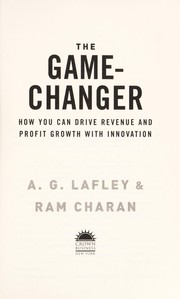
A.G. Lafley and Ram Charan describe how a consumer goods giant treats innovation as a leader-driven business process anchored in the consumer, open partnerships and routine review.
Clayton M. Christensen
Clayton Christensen's study of why well-run incumbents lose to disruptive entrants, showing how listening to best customers and chasing profit can blind leaders to new markets.
Joan Magretta
A short, readable explanation of Michael Porter's ideas on strategy, five forces, value chains and competitive advantage, useful for reading industry structure in FMCG.
Reading works best alongside a live problem. These articles and resources cover the same ground in practical, operator-level terms.
If the immediate question is how to grow share, begin with the growth-and-brand research titles in this section; if it is where to compete and what to give up, begin with a competitive-strategy title. The category page lists each book with its FMCG relevance and limitations so you can match it to the decision you face.
Yes, when read selectively. Ideas about positioning, trade-offs and customer jobs transfer well. Examples drawn from technology or services need adjusting for physical distribution, retailer power and thin margins, which is why each recommendation notes where it fits and where it does not.
Some address emerging markets directly; most do not. Where a title is Western-market focused we say so in its limitations, and the Route-to-Market section collects the books that deal with traditional trade and emerging-market distribution.
As an Amazon Associate I earn from qualifying purchases. Purchases are completed on Amazon.com. Affiliate disclosure